Global study shows energy industry ramping up investment in autonomous operations by 2030 as AI reshapes performance
AGÊNCIA DE COMUNICAÇÃO Conteúdo de responsabilidade da empresa 27 de março de 2026
- Study of 400 senior energy and chemicals leaders across 12 countries signals a tipping point: the sector is racing towards almost 50% full automation by 2030 with close to a third of operations already fully autonomous
- 59% warn that delaying adoption will drive up operating costs, as the sector races to manage inflation and a retiring workforce
- Gulf Cooperation Council (GCC) and Asia lead on current adoptions levels with North America planning the most aggressive acceleration, fueled by AI-driven energy demand and expanding data center footprint
HOUSTON, March 27, 2026 (GLOBE NEWSWIRE) — Schneider Electric, a global energy technology leader, today unveils new research highlighting a powerful combination of pressures pushing autonomous operations to the top of the agenda for the energies and chemicals sector.
The study of 400 senior energy and chemicals executives across 12 countries shows a sharp rise in urgency around autonomy. A third of executives (31.5%) say advancing autonomy is a critical priority in the next five years, rising to 44% over a ten-year horizon. Fewer than 5% globally view it as a low priority.
Leaders cite strong commercial pressures. They warn that delaying adoption risks higher operating costs (59%), worsening talent shortages (52%), and declining competitiveness (48%). Yet adoption is not without obstacles. Key barriers include high upfront costs (34%), legacy systems (30%), organizational resistance (27%), cybersecurity concerns (26%), and regulatory uncertainty (25%).
Schneider Electrics Global Autonomous Maturity Report shows the sector at a critical point of transformation as electrification, automation, and digitalization converge. Surging AI demand, driven predominantly by hyperscale cloud and data -center growth, is placing unprecedented pressure on global energy systems. Electricity demand is projected to nearly double to 1,000 TWh by 2030, intensifying the need for flexible, efficient, and resilient operations.
Within this emerging AI energy nexus, 49% of executives identify AI as the single biggest enabler of autonomous acceleration, followed by cybersecurity advancements, cloud and edge computing, digital twins, advanced process control, and open, software-defined automation.
Globally, organizations already report operating at 70% autonomy, with plans to hit 80% by 2030, said Gwenaelle Avice Huet, Executive Vice President, Schneider Electric. Autonomy is rapidly becoming the new operating model of industry. As AI advances and energy systems come under growing pressure, autonomous operations are proving essential for resilience and competitiveness. And this shift isnt about replacing people, its about empowering them to focus on higher value work, strengthening safety, and elevating skills. Those who scale now will shape the next era of industrial performance.
Industry analysts agree the shift is further along than expected. The report finds the adoption of autonomy in the sector to be more advanced than expected, with open, software-defined automation essentially leading the next phase of energy innovation, added Gaurav Sharma, Independent Energy Market Analyst and contributor to the research. In a sector where reliability, safety, and carbon reduction are now nonnegotiable, these technologies are emerging as the most effective way for operators to deliver more with less and run more resilient and competitive operations.
The momentum is clear, but progress uneven, with the data highlighting regional differences in readiness levels. While GCC countries and Asia currently lead in maturity, North America is set for the fastest acceleration in adoption over the next five years, powered by its scale in energy production and consumption, and its rapidly expanding datacenter footprint. Europe maintains steady progress but faces the slowest adoption trajectory.
Autonomous operations are redefining how energy and chemicals companies run their entire facilities, and Schneider Electric and AVEVA are at the forefront of that shift, supporting customers such as Shell, European Energy, ADNOC and Baosteel on realworld deployments, said Devan Pillay, President of Schneiders Heavy Industries Segment. By integrating Schneider Electrics process control and power management with AVEVAs digital technologies and industrial intelligence, we deliver integrated software-defined architectures that provide real-time visibility and enable AI driven digital twins that can predict, adapt and self-optimize with minimal intervention.
Recent deployments showcase this shift. At Shells Scotford Refinery in Canada, Schneider Electric is helping modernize operations through open, softwaredefined automation, supporting more flexible, autonomous operations. At European Energys Kassø PowertoX facility, the worlds first commercially viable emethanol plant, Schneider Electric and AVEVA are together enabling AIsupported, selfoptimizing cleanfuel operations with resilient remote monitoring.
The research was commissioned in partnership with Censuswide and Development Economics, supported by insights from Independent Energy Market Analyst, Gaurav Sharma. It captures insights from 400 senior energy executives across 12 countries in four key regions North America, Europe, Asia, and the GCC supported by desk research and conversations with industry stakeholders and commentators across the global energy and chemicals sector.
Press contact: global.pr@se.com
Notes to Editors:
- The framework used in the study is the Autonomous Operations Maturity Model (AOMM) developed by ARC Advisory Group, which outlines a five-step hierarchy for adoption of autonomous technology, with Level 5 representing full autonomy. The report data reveals:
- The global average of current maturity is reported at 3.52 out of 5, between Advanced Regulatory(where technology is in control of specific scenarios and humans are alerted when unexpected events occur) and Select Autonomy (systems run autonomously in specific scenarios, e.g., can detect and correct issues, but humans still needed for repairs and resets).
- To enhance clarity and aid understanding of these levels, Advanced Regulatory has been assigned as Advancing Maturity and Select Autonomy as High Maturity in Schneider Electrics Global Autonomous Maturity Report. The percentage equivalent of level 3.52 has been calculated as approximately 70% autonomy.
- The global average ambition for 2030 is to reach level 4.02 (High Maturity, approximately 80% autonomy), where systems can operate autonomously across defined scenarios with humans overseeing, correcting, and optimizing when needed.
- The level of current and desired autonomous operations in the next 5 years is asked in Q1 of the Censuswide survey (How would you rate your current and desired level(s) of autonomous maturity within your organization?).
About Schneider Electric
Schneider Electric is a global energy technology leader, driving efficiency and sustainability by electrifying, automating, and digitalizing industries, businesses, and homes. Its technologies enable buildings, data centers, factories, infrastructure, and grids to operate as open, interconnected ecosystems, enhancing performance, resilience, and sustainability. The portfolio includes intelligent devices, software-defined architectures, AI-powered systems, digital services, and expert advisory. With 160,000 employees and 1 million partners in over 100 countries, Schneider Electric is consistently ranked among the worlds most sustainable companies.


Schneider Electric Smart Factory
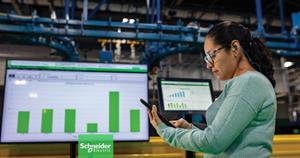
Schneider Electric smart factory, Lexington
A OESP nao e(sao) responsavel(is) por erros, incorrecoes, atrasos ou quaisquer decisoes tomadas por seus clientes com base nos Conteudos ora disponibilizados, bem como tais Conteudos nao representam a opiniao da OESP e sao de inteira responsabilidade da GlobeNewswire